RSS

GTA Housing Market, March 2026: Improving Activity, But Sellers Still Don’t Have Broad Leverage

The spring market showed more life than January, but the numbers still point to a tightening market, not a full recovery. Demand improved. Supply stayed heavy. Pricing power remained fragile.

The March 2026 TRREB data points to a market that is clearly healthier than the weak January start, but still not strong enough to give sellers broad pricing leverage. Sales improved materially through the quarter, months of inventory moved lower, and the market felt less frozen. But active inventory stayed elevated and benchmark pricing remained negative year over year.

That combination matters because it separates activity from pricing power. More homes traded. That does not mean sellers regained control.

Section 1

What changed from January to March

January opened weak. February improved. March improved again on volume, but not enough to erase the inventory overhang. The quarter tells a simple story: buyers re-engaged faster than prices recovered.

Section 2

The market economics, in plain English

Demand improved

Sales rose from 3,082 in January to 5,039 in March. That is a 63.5% gain across the quarter. It tells us buyers were coming back into the market after a very soft start to the year.

Supply also stayed heavy

Active listings rose from 17,975 to 21,596 over the same period, an increase of about 20.1%. So while more homes sold, buyers still had a lot of choice. That kept negotiation leverage from swinging fully back to sellers.

Absorption improved, but not enough to create broad seller power

SNLR improved from 28.6% in January to 36.1% in February, then eased to 34.9% in March as seasonal listing flow came back. MOI improved from 5.8 to 4.3, which is constructive. But 4.3 months is still not scarce inventory.

Section 3

Why prices are still lagging

The average selling price rose from $973,289 in January to $1,017,796 in March, but that quarter-to-quarter improvement does not mean the market healed. On a year-over-year basis, average price stayed negative throughout the quarter: down 6.5% in January, 7.1% in February, and 6.7% in March. The MLS HPI Composite benchmark also stayed negative, moving from -8.0% to -7.4%.

That is the clearest numerical proof that pricing remained under pressure. The market was stabilizing, not surging.

Section 4

The Bank of Canada backdrop

The Bank of Canada held the policy rate at 2.25% on January 28 and again on March 18, 2026. That means the spring pickup in housing activity was not driven by fresh rate relief during the quarter. The market improved under a stable, not newly stimulative, rate environment.

That distinction matters. The quarter did not improve because policy suddenly turned loose. It improved because buyers gradually adjusted to the prevailing rate environment, lower prices than a year ago, and a market that was no longer deteriorating as quickly as before.

In other words, the March market was adjustment-driven rather than stimulus-driven. That helps explain why activity improved while pricing remained fragile.

Section 5

Strategic implications

For sellers

This is a market that still punishes weak launch strategy. Sellers who overprice, underprepare, or misread early demand signals remain vulnerable because buyers still have alternatives. Precision matters: pricing, presentation, positioning, and speed of adjustment are doing more of the work than broad market momentum.

For buyers

Buyers still have negotiating room, but not as much as they had in January. Better listings are more likely to get serious engagement, while exposed listings still create opportunity. This is a market that rewards discrimination, not blanket low-balling.

For market interpretation

The cleanest framing is this: the GTA market is tightening, but it is not healed. It is healthier than the weak January opening suggested, yet still too inventory-heavy to call it a true seller market.

Bottom line

This is not 2021. It is not frozen either. It is a disciplined, selective market where strategy still matters more than optimism.

Suggested website CTA: Need help reading what the March market actually means for your property, timing, or buying strategy? Book a private consultation.

Sources: TRREB Market Watch reports for January, February, and March 2026; Bank of Canada rate announcements on January 28 and March 18, 2026.

Prepared for: Olivia Williams Realty · @oliviawilliamsrealty

Read

Not collapse. Not recovery - Setup

Market Analysis

The GTA Housing Market Is Coiled — But Not Cleared for Rebound

Spring 2026 is not a collapse story, and it is not a recovery story either. It is a market where supply is pulling back faster than demand is returning — leaving conditions tighter, but still fragile.

By Olivia Williams Licensed Realtor® | Right at Home Realty Greater Toronto Area Spring 2026 Deep Dive

February 2026 GTA Snapshot

Sales
3,868
Down 6.3% year over year. Demand is still soft.
New Listings
10,705
Down 17.7% year over year. Supply is pulling back faster than sales.
Average Price
$1.009M
Down 7.1% year over year across all TRREB areas.
Market Structure
SNLR 33.6%
Five months of inventory. This is still a negotiation market.

If you only read the headline version of the February numbers, you could talk yourself into believing the Greater Toronto Area housing market is finally turning. That reading is too generous. The more accurate view is narrower and less comfortable: the market has tightened at the margin, but it has not recovered.

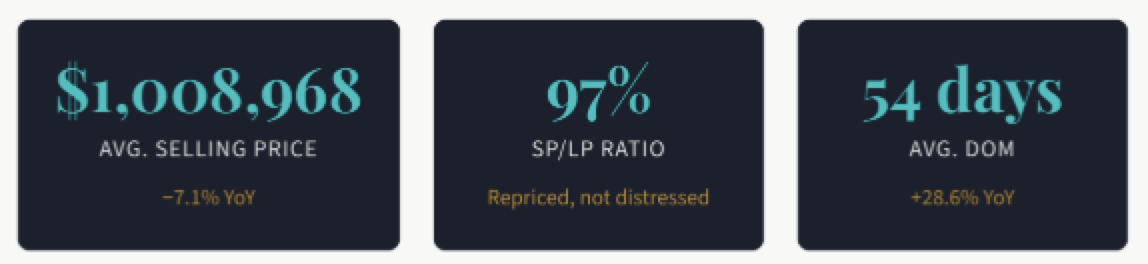
February 2026 GTA home sales came in at 3,868, down 6.3% year over year. New listings fell harder, down to 10,705, a 17.7% annual decline. Active listings still sat at 19,314. The average selling price was $1,008,968, down 7.1%, while the MLS HPI composite benchmark was down 7.9% year over year.

Real Read
This is not a demand-led rebound.

It is a market where sellers are stepping back faster than buyers are stepping in. Less new supply does not automatically mean strength. Sometimes it simply means owners do not like the pricing environment enough to list.

Micro Structure

The market is tighter, but still clearly negotiable

Structure matters more than the headline

The cleanest way to read this market is through structure, not press-release language. Across all TRREB areas, the sales-to-new-listings ratio was 33.6%, months of inventory were 5.0, the average sale-to-list price ratio was 97%, average listing days on market were 36, and property days on market were 42.

Those are not seller-market conditions. They describe a market where buyers still have room to negotiate and where pricing discipline matters far more than generic spring optimism. Yes, the market tightened relative to last year because new listings fell faster than sales. But less loose is not the same thing as healthy. A market can tighten mechanically while still being fundamentally soft.

The GTA market has tightened at the margin, but it has not recovered.
Core thesis for spring 2026
Key Signal 33.6% SNLR

That is still well inside buyer-leaning territory. It does not support a broad seller-market narrative.

Key Signal 5.0 Months of Inventory

Inventory is not scarce enough to create widespread urgency. Buyers still have decision time.

Pressure Thesis

The original pressure thesis was not wrong

What still holds

The strongest part of the earlier “coiled market” thesis still holds. This is not a distressed market. Sellers are not capitulating in large enough numbers to create disorder. There is no sign of broad forced liquidation. The more accurate description is a market under pressure, with participants still trying to avoid realizing weakness unless they need to transact.

That is why some neighbourhoods and some product types still feel tighter on the ground than the broader market data might suggest. It also explains why the market feels conflicted. It is soft in the aggregate, but not broken at the street level. Scarce, well-priced homes can still trade properly. The problem is that this does not describe the whole market.

97%
Average Sale-to-List
36
Average Days on Market
42
Property Days on Market
Macro Overlay

What changed is not the micro read. It is the macro overlay.

Why the timing call needed correcting

The reason the original version needed tightening is simple: the timing call was too aggressive. A rebound in housing is not powered by lower rates alone. It needs confidence, and confidence is still weak.

The Bank of Canada held its policy rate at 2.25% on January 28, 2026. More importantly, the Bank was explicit that the outlook remains vulnerable to unpredictable U.S. trade policies and geopolitical risks, and that the Canadian economy is still adjusting to U.S. tariffs and the new global trade landscape, with growth expected to remain modest.

That is not the language of a clean macro backdrop. So yes, rates are off the highs. But that alone is not enough to unlock a broad demand return when the surrounding economic picture still feels unstable.

The market is coiled in a structural sense, but the release valve has not opened because macro confidence is still missing.
Why lower rates have not translated into a broad rebound
Bank of Canada Policy Rate: 2.25%

Financing is less painful than at peak tightening, but not loose enough to override broader uncertainty.

Macro Risk Tariffs + Geopolitics

Trade friction and Middle East risk matter because they feed uncertainty, inflation risk, and household hesitation.

Labour Market

Labour conditions are not supporting a clean spring bounce

Why unemployment matters in a housing cycle

The labour market is another reason to stay disciplined. Statistics Canada reported that Canada’s unemployment rate rose to 6.7% in February 2026, while Ontario’s unemployment rate rose to 7.6%. On the ground, that matters because housing demand does not disappear when employment weakens, but it does become more selective, more cautious, and more price-sensitive.

That is exactly what the GTA data is showing now. First-time buyers hesitate. Move-up buyers become defensive. Investors become harder to motivate. The result is not a dead market. It is a thinner market.

  • Lower confidence weakens urgency.
  • Higher uncertainty raises price sensitivity.
  • Selective demand rewards A-grade homes and punishes mediocre listings.
Provincial Context

Ontario still has too much inventory to justify a bullish provincial read

The GTA does not operate in isolation

The provincial backdrop still looks heavy. OREA and CREA reported that Ontario had 24,145 new residential listings in February 2026, down 11.6% year over year, but still had 49,884 active listings at month-end — the highest February inventory level in more than a decade. Months of inventory were 5.3, well above the long-run average of 2.6 for this time of year.

That matters because even if GTA listing flow has started to contract, the broader Ontario market still carries enough inventory to limit how aggressive you can be with a rebound narrative.

Hyper-Local Read

Where the weakness still sits inside the GTA

Detached is holding better. Condos are still the weakest link.

The GTA is not one market. It is several markets moving at different speeds. The February tape is not just a condo problem, although condos remain the weakest major category.

TRREB’s February breakdown shows 1,683 detached sales at an average price of $1,325,654, versus 1,088 condo apartment sales at an average price of $626,650. Detached is holding up better, but that is relative resilience, not strength. Condos remain the most obvious soft spot because they are supposed to be the affordability bridge in the GTA, yet they are still absorbing the brunt of the repricing.

Detached More Resilient

Family-grade supply is scarcer, which is helping detached hold value better than entry-level product.

Condos Still Repricing

Condos are supposed to be the affordability bridge. Right now, that bridge is still unstable.

Bottom Line

So what is the right spring 2026 call?

Not collapse. Not recovery. Setup.

That is the right word. The market is coiled in the sense that supply is no longer flooding the system, sellers are still resisting weakness where they can, and there is clearly sidelined demand waiting for a better entry point. But that demand is still conditional. It needs cleaner price stability, better confidence, and fewer macro shocks.

Until that happens, this remains a buyer-leaning, negotiation-heavy market with selective strength, not a broad recovery market. Well-priced, scarce, high-quality homes can still sell well. Mispriced listings will still sit. Sellers anchored to old peak-market expectations will continue to lose time. Buyers who stay disciplined still have leverage in much of the market.

The corrected version of the original thesis is simple: the GTA market is coiled, but not cleared for rebound.
Spring 2026 conclusion

That is the real spring 2026 read: not bullish, not broken, just tight enough to matter and fragile enough to respect.

Source Base

CMS Notes

  • This version is already stripped down to a pure embeddable HTML body block for CMS use.
  • If your CMS strips the <style> tag, move the CSS into your site’s custom CSS area and keep only the wrapper div and content markup.
  • The wrapper class ow-market-blog namespaces the layout so it is less likely to conflict with your theme styles.

Read

The GTA Market Pressure Report

Why February 2026 is the Last Chapter Before the Recovery

The Greater Toronto Area real estate market is sending a clear, powerful signal — and most market participants are misinterpreting it. The headline numbers seem to paint a picture of a slow, quiet market: sales are down, prices are down, and properties are taking longer to sell. Beneath the surface, a different story is unfolding.

This is not a slow market. It is a market under immense, building pressure. For sophisticated investors and serious principals, the current window represents a strategic opportunity that is both temporary and fragile. This report breaks down the four key pressure points revealed in the February 2026 data — and explains why the conventional wisdom is wrong.

01 The Supply Paradox: Contraction Outpaces Demand

The most bullish signal in the entire report is not in the sales figures, but in the listings. While total sales were down 6.3% year-over-year at 3,868 transactions, new listings fell a staggering 17.7% YoY to 10,705 — a contraction nearly three times the magnitude of the decline in demand.

This is the Supply Paradox: in a market widely perceived as slow, supply is contracting faster than demand. Sellers are proving more hesitant than buyers. This dynamic prevents the buildup of excess inventory that would lead to a true buyer's market with significant price degradation. Instead, it creates a structural floor, tightening the market from the supply side even as demand moderates.

The divergence is most striking in the detached and semi-detached segments. New listings for detached homes fell 8.2% while detached sales actually rose 3.6%. Semi-detached listings dropped 13.1% against a 3.8% decline in sales. This is not the behaviour of a collapsing market; it is the behaviour of a market consolidating its base.

02 The Price Signal: Repriced, Not Distressed

With the MLS® HPI Composite down 7.9% YoY and the average selling price at $1,008,968 (down 7.1% YoY), it is clear that prices have adjusted from their peak. However, the nature of this adjustment is critical - and widely misunderstood.

Two metrics reveal the market is repriced, not distressed. The average Sale-to-List Price Ratio (SP/LP) is 97%, indicating that sellers are pricing in line with current market realities and achieving those prices with only a minor 3% negotiation margin. A distressed market would see SP/LP ratios fall into the low 90s or high 80s. That is not what the data shows.

The average Days on Market of 54 days — while up 28.6% YoY - provides buyers with the most valuable asset in any negotiation: time.1] Time to conduct due diligence, arrange financing without pressure, and make rational, strategic decisions. This combination of price stability and expanded negotiation time is a hallmark of a mature, consolidating market, not a chaotic one.

03 The SNLR Compass: A Structural Buyer's Market

The Sales-to-New-Listings Ratio (SNLR) is the single most important indicator of market balance. It measures the proportion of new listings that are absorbed by sales in a given period. An SNLR below 40% signals a buyer's market; between 40-60% indicates balance; above 60% signals a seller's market.

For February 2026, the GTA SNLR stands at 33.6%, with a corresponding 5.0 Months of Inventory (MOI). This places the market firmly in buyer's territory. However, the critical nuance is directional: the SNLR is trending upward year-over-year as supply contracts faster than demand. The compass needle is pointing to "Buyer" — but it is moving.

This is not a soft, temporary dip into buyer's market conditions. It is a structural buyer's market, created by the intersection of elevated inventory from prior months and suppressed new supply. The structural nature of this condition means it will not resolve gradually; it will resolve suddenly when the demand trigger is pulled.

04 The Coiled Spring: 100,000+ Buyers on the Sidelines

The final, and most explosive, piece of data comes directly from TRREB's own market analysis. It is the force that will be released when the pressure becomes too great to contain.

This is not a slow market. It is a loaded market. Over 100,000 households are actively waiting for the right signal to enter. The two triggers identified by TRREB - price stabilization and positive trade news — are both within the range of near-term probability. When those triggers arrive, the release of pent-up demand will not be gradual. It will be rapid, and it will compress the buyer's window significantly.

05 The Spring 2026 Thesis: The Window Is Open

When you synthesize these four pressure points, the conclusion is unavoidable. The spring 2026 season is not a quiet market - it is the last chapter before the recovery.

The question for serious market participants is not whether the market will move. The question is whether you will move first. The combination of price relief, expanded negotiation time, and contracting supply is perishable. It will not persist beyond the point at which the demand trigger is pulled.

If you are considering a strategic acquisition or disposition in the Greater Toronto Area, the current market dynamics present a rare and time-limited opportunity. DM SPRING for a personalized GTA market strategy session.

References

1. Toronto Regional Real Estate Board. TRREB Market Watch, February 2026. Published March 5, 2026. https://trreb.ca/wp-content/files/market-stats/market-watch/mw2602.pdf
2. Mercer, Jason (CIO, TRREB). Quoted in TRREB Market Watch, February 2026, p.1. Toronto Regional Real Estate Board. March 5, 2026.

Read

Toronto Waterfront Penthouses: Why This Niche Still Holds Power in 2026

The broader Toronto condo market has become more balanced, but waterfront penthouses continue to operate under different dynamics. Condo apartment sales declined in late 2025, reflecting more cautious buyer activity overall. 

However, ultra‑luxury and unique properties across the GTA have shown notable resilience even as broader activity cooled. 

Why Waterfront Penthouses Are Different:

1. Extremely limited supply

True penthouse inventory — especially with unobstructed lake views — is structurally scarce.

2. Wealth‑driven buyer pool

Purchasers in this segment are less rate‑sensitive.

3. Lifestyle premium

Waterfront living continues to command emotional and lifestyle value.

Buyer Strategy for 2026: 

  • Monitor specific buildings

  • Track long‑DOM opportunities

  • Move quickly when rare layouts appear

Seller Insight: Positioning and presentation remain critical — even in premium niches.

Olivia Williams
Realtor® | Right at Home Realty
416-302-6360 || realtoroliviawilliams@gmail.com

Read

Why 2025–2026 Is a Rare Opportunity for Downsizers in the GTA

The Market Has Shifted

The combination of increased inventorymoderated pricing, and a slower pace of sales has created a unique environment where downsizers have leverage.

Here's why downsizers benefit more than most buyers right now:

1. You’re Buying in a Soft Market

Condo and boutique townhome inventory is healthy.
Prices are more negotiable than they’ve been in years.

2. You Can Sell Strategically

Even in a soft market, premium properties (renovated detached homes, properties in established communities) still attract strong attention when properly positioned.

3. Your Equity Works Harder Now

If you’ve owned for 8–20+ years, your price floor remains strong even with recent market softening.

4. Interest Rate Shifts Favour You

BoC’s rate adjustments gradually improve affordability and confidence.

Download your Downsizer Strategy 2025 Guide or contact me to build your custom transition: 

https://private-office.myrealpage.com/webdrive/66120/_media/Gta%20Downsizer%20Handbook.pdf

Read

“Is the GTA Now a Buyer’s Market? What TRREB Data Reveals — and How Smart Buyers Can Take Advantage”

Market Snapshot

Based on recent data from the Toronto Regional Real Estate Board (TRREB), the GTA has shifted into clear buyer-leaning territory.

  • Sales-to-New-Listings Ratio (SNLR) has hovered near or below 40%, the threshold that traditionally signals a buyers’ market.

  • Inventory has risen across multiple segments, giving buyers more choice and negotiation power.

  • Average GTA sale prices year-over-year have shown notable softening, especially in detached and condo categories.

(Sources: TRREB Market Watch, CREA Housing Market Stats, Bank of Canada rate updates)

Why This Matters for Buyers

  • More listings = more leverage

  • Less competition = fewer bidding wars

  • Softening prices = better value entry points

  • Longer DOM = stronger negotiation power

Ideal Opportunities Right Now

  • Luxury estates that have been on the market 60+ days

  • Waterfront & Harbourfront condos

  • King, Vaughan, Aurora luxury segment where inventory is higher

  • Downsizer-friendly townhomes & bungalow-style homes

What Buyers Should Do Now

  1. Get rate-locked with your lender (BoC rate cuts open opportunity).

  2. Seek value-based pricing (properties with long DOM often adjust).

  3. Explore micro-markets — the best “deals” are hyper-local.

  4. Partner with a data-driven agent who understands market fragmentation.

CTA

If you'd like a GTA Buyer’s Advantage Report tailored to your criteria, contact me anytime.

Olivia Williams
Realtor® | Right at Home Realty
🌐 www.oliviawilliamsrealty.com
📞 416-302-6360
📧 realtoroliviawilliams@gmail.com
“Where Integrity Meets Exceptional Real Estate.”

Read

New property listed in King

I have listed a new property at 65 Kingswood Drive in King. See details here

Experience upscale estate living at 65 Kingswood Drive, a stately multi-generational residence set on 2.68 acres at the end of a private cul-de-sac in prestigious Kings Glen Estates. Showcasing an impressive 671-ft frontage-the largest on the street-and backing directly onto Centennial Park, this property offers unmatched privacy, ravine beauty, and a lifestyle defined by space, sophistication, and tranquility.A grand marble foyer with a soaring 20-ft ceiling and sweeping staircase introduces over 7,200 sq. ft. of elegant living space. Expansive principal rooms feature cherry hardwood floors, custom millwork, 9-ft walnut doors, and oversized windows that frame serene views of mature trees and manicured grounds. The 500 sq. ft. gourmet kitchen offers a 45-sq. ft. island, granite counters, premium appliances, and a sunlit breakfast area with seamless indoor-outdoor flow.The home includes 6 bedrooms and 7 bathrooms, highlighted by a private primary suite with a spa-inspired ensuite, dressing area, and 500-sq. ft. terrace overlooking the ravine. A fully self-contained second dwelling with private entrance, living/dining area, kitchenette, bedroom with ensuite, and walkout deck is ideal for multi-generational living or extended guests.Modern conveniences include a ZON Whole House Audio System, in-ceiling speakers, and smart intercom. Outdoors, the estate features a roughed-in Par-3 golf area, secluded plateau for a future pool, private winter toboggan slope, and direct access to King Trails at Centennial.This rare offering blends timeless architecture, natural beauty, and functional luxury-a true legacy estate where prestige meets privacy in one of King's most coveted neighbourhoods.

Read

Downsizing

Unlock Your Golden Years: Downsize in the GTA’s Buyer-Boom—Before It Slips Away!

You’ve filled your big GTA home with memories—but spacious doesn’t always mean supportive. If you’re an empty-nester itching for simpler days, or a retiree ready to trade upkeep for adventure, 2025 is shouting at you: now’s your moment to cash in and live free.


📈 The GTA Market is Leaning in Your Favor

  • Inventory is surging: New listings in the GTA jumped ~22.4% in August over last year, with about 27,500 homes now on the market. 

  • More time + more leverage: Average days on market are rising (~49 days in August vs. ~44 last year), and the sales-to-listing price ratio has slipped—buyers are no longer forced to pay over asking.

  • Prices are easing: The average selling price in the GTA is now ~$1,022,000—all-property types—down ~5.2% year-over-year. Detached, semi-detached, and townhouses are off by ~4–7%.

  • Interest at last: a meaningful drop: The Bank of Canada’s policy rate has fallen to 2.50% as of mid-September 2025. Bank of Canada+1 While fixed mortgage rates are still elevated, variable/rate discounts and special fixed-term offers are becoming more favourable. True North Mortgage+1


💡 Why Downsizing Now Can Transform Your Life

  • Unlock tens or even hundreds of thousands in equity: Even with price softening, your long-held home has likely appreciated massively since the lows. Selling now means capturing that peak value before conditions shift.

  • Slash your ongoing costs: Moving to a smaller, lower-maintenance place could reduce property taxes, utility bills, maintenance, and insurance by 30-40% or more, depending on your choices.

  • Choose freedom over footprint: Less time mowing lawns, shovelling snow, or managing a big house means more time for things that matter—travel, hobbies, family, or simply peace.


🚦 The Catch: This Window Won’t Stay Open Forever

  • Buyers are enjoying affordability and choice now—but inventory could tighten if sellers grow cautious or interest rates stabilize.

  • Even modest upward pressure on rates or renewed economic uncertainty could tilt negotiating power back to sellers.


🔗 Take Action for the Next Chapter You Deserve

Don’t wait for regret. Let’s sketch out your downsizing plan—how much equity your current home could deliver, what kind of smaller home fits your lifestyle, and where you can put that cash to work (sunny travel, a passion project, simply more rest).

Book your free, no-obligation GTA market valuation now. Let’s turn your next chapter into your most fulfilling one yet.

https://calendly.com/realtoroliviawilliams

or Call: (416) 302-6360

Download your free no obligation Downsizer’s Handbook: 🏡 GTA Downsizer’s Handbook

Read

Interest Rates, Prices & Affordability: Fall Outlook

(What CREA & TRREB Data Reveal for GTA Buyers)

Introduction

The Greater Toronto Area (GTA) housing market in 2025 offers a rare window for buyers, driven by the Bank of Canada’s September 17, 2025, rate cut to 2.5%—the first since March—and a buyer-friendly market with falling prices and record inventory. Despite persistent affordability challenges, the latest Toronto Regional Real Estate Board (TRREB) and Canadian Real Estate Association (CREA) data reveal opportunities for strategic buyers. Here’s what you need to know to seize this moment.

What CREA & TRREB Are Saying

  • National Average Price (CREA): $672,784 in July 2025 (+0.6% YoY, -2.7% MoM)

  • National HPI Benchmark: $693,300 (-3.4% YoY)

  • GTA Average Sold Price (TRREB): $1,022,143 in August 2025 (-5.2% YoY)

  • GTA MLS® HPI Benchmark: $969,700 (-5.2% YoY)

TRREB reports 5,211 GTA home sales in August 2025 (+2.3% YoY), but demand remains historically low. New listings surged 9.4% to 14,038, with a record 27,495 active listings, creating a balanced market with 4.7 months of inventory.

Detailed Breakdown by Property Type

Price declines across property types signal affordability gains:

  • Detached: $1,312,240 (-7.2% YoY)

  • Semi-Detached: $980,102 (-4.5% YoY)

  • Freehold Townhouse: $946,395 (-4.5% YoY)

  • Condo Apartment: $642,195 (-4.8% YoY)

Condos, with 9,105 active listings and 40 days on the market, offer the best entry point for first-time buyers.

Interest Rates & Stress Test: A Game-Changer

The Bank of Canada’s 25-basis-point cut to 2.5% on September 17, 2025, lowers borrowing costs, with variable mortgage rates dropping to ~3.7% and 5-year fixed insured rates at ~3.89%. This eases payments—for example, a $642,195 condo now costs ~$200 less monthly on a variable-rate mortgage. However, the stress test, requiring qualification at ~5.89%, still challenges buyers, though it’s less punitive with rates falling.

Affordability Today vs. Recent Past

GTA benchmark prices are 24% below their February 2022 peak ($969,700), a significant reset. The rate cut boosts purchasing power, but high carrying costs—mortgage payments, taxes, insurance, and maintenance—demand robust down payments. With unemployment at 7.1% in August 2025, economic uncertainty tempers optimism, yet lower rates and prices create a buyer’s market not seen since 2021.

Tips for Buyers in This Market

  • First-Time Buyers: Snap up condos ($642,195 avg.) or townhouses ($946,395 avg.) in areas like Mississauga or Toronto’s core for affordability and lifestyle.

  • Move-Up Buyers: Detached homes, down 7.2% to $1,312,240, offer value but require larger budgets.

  • Negotiate Smart: Record inventory (27,495 listings) gives leverage to secure deals, especially on condos with high supply.

  • Monitor Rates: Further cuts are possible in October or December 2025, but rising bond yields could push fixed rates up. Act before potential market shifts.

Conclusion: Seize the Opportunity

The GTA is firmly a buyer’s market in 2025, with prices down, inventory at record highs, and the Bank of Canada’s rate cut to 2.5% easing affordability. However, the stress test and economic headwinds like unemployment (7.1%) and slowing GDP (-0.4% in Q2) require caution.Key Factors to Watch:

  • Further Bank of Canada rate moves

  • Bond yield trends affecting fixed rates

  • Inventory growth and listing trends

  • Job market recovery to boost confidence

With more choice and leverage than in years, now is the time to act. Contact me for a free consultation to navigate this market and secure your dream GTA home at the right price.

Posted September 18, 2025 | By Olivia Williams, GTA Realtor
Email: realtoroliviawilliams@gmail.com | Phone: 416-302-6360 | Website: https://oliviawilliamsrealty.com/

Read

Power of Sale in the GTA: Opportunities, Risks, and How to Secure the Best Deal

Buying a home in the Greater Toronto Area (GTA) is one of the most significant investments you can make, and for many savvy buyers, power of sale properties present a unique opportunity. Whether you’re an investor looking to expand your portfolio or a homebuyer searching for value, understanding the power of sale market can open doors to exciting possibilities.

Types of Power of Sale Properties in the GTA

Foreclosure opportunities in the GTA come in various forms, including:

  • Single-Family Homes – Often found in suburban neighbourhoods, these can be ideal for families or as rental investments.

  • Condominiums – A common power of sale type in the city, offering low-maintenance living at a reduced cost.

  • Multi-Unit Properties – Attractive to investors who want multiple income streams.

  • Luxury Properties – Occasionally, high-end homes also enter power of sale, presenting rare chances to buy at a significant discount.

  • Commercial - Attractive to investors.

Advantages of Buying a Power of Sale  Property

Power of Sale can be appealing for several reasons:

  • Price Advantages – Banks and lenders typically want to recover funds quickly, so these properties are often listed below market value.

  • Equity Potential – With smart renovations and upgrades, buyers can significantly increase a property’s value.

  • Entry Into Desirable Areas – Foreclosures sometimes appear in high-demand neighbourhoods, allowing buyers access to areas that might otherwise be out of reach.

Disadvantages to Consider

While the potential is high, power of sale properties also come with considerations:

  • “As-Is” Condition – Properties may require repairs, renovations, or updates.

  • Competitive Bidding – Deals often attract multiple buyers, leading to bidding wars.

  • Uncertainty in Process – Power of Sale may involve longer timelines or additional paperwork compared to traditional sales.

The Buying and Selling Process

Navigating Power of Sale properties requires experience and guidance. Generally, the process includes:

  1. Identifying Listings – Many power of sales aren’t widely advertised. Access to exclusive listings gives buyers an edge.

  2. Due Diligence – Inspections, property history reviews, and legal checks are crucial.

  3. Submitting Offers – Banks and lenders review offers differently than traditional sellers, which means negotiations can vary.

  4. Closing the Deal – With the right representation, buyers can move through the process smoothly and with confidence.

How I Can Help You Secure a Great Deal

With my expertise in the GTA market, I can guide you through every step of the power of sale process—from sourcing exclusive opportunities to negotiating the best possible price. My goal is to help you maximize value while minimizing risk, whether you’re buying your first home, investing, or looking for a renovation project.

Ready to Explore Power of Sale Opportunities in the GTA?

Call me today to access exclusive foreclosure listings and secure a property that fits your goals. Don’t miss out on the chance to buy smart, invest wisely, and get the best deal possible.

Call: 416-302-6360

Access Power of Sale - Residential Listings: Here

Access Power of Sale  - Commercial Listings: Here

Read

Explore Penthouse Living in Downtown Toronto

Perched high above the city, downtown Toronto’s penthouses redefine modern luxury. From sweeping skyline and lake views to private terraces, soaring ceilings, and curated amenities, these residences offer a lifestyle reserved for the few. Living in a penthouse is more than just owning a home—it’s claiming a piece of the city’s most coveted real estate, where sophistication, privacy, and prestige meet at the top.

✨ Ready to explore the possibilities? I’ve created an exclusive 10-page guide that covers everything you need to know about buying a penthouse in downtown Toronto.


To Download Your Guide Today: Click Here

Ready to explore the Penthouse Listings? Click Here

Read

Yorkville Condos well under a $1 Million & Affordable

A Smart Entry into One of Toronto’s Most Prestigious Neighbourhoods

Yorkville is synonymous with luxury. Lined with haute couture boutiques, acclaimed restaurants, private art galleries, and some of Toronto’s most iconic residential buildings, this historic neighborhood effortlessly blends old-world charm with modern sophistication.

While it’s best known for its multimillion-dollar penthouses and exclusive residences, there’s a lesser-known truth savvy buyers are catching onto: there are exceptional real estate opportunities in Yorkville under $1 million — and they’re worth your attention.

Why Yorkville?

Located in the heart of midtown Toronto, Yorkville offers an unmatched lifestyle. Whether you're walking to Whole Foods, browsing at Holt Renfrew, attending an exhibit at the Royal Ontario Museum, or enjoying a quiet morning in the Annex, everything is quite literally at your doorstep.

Buyers are drawn to Yorkville for:

  • Unbeatable location (minutes to Bloor-Yonge subway station)

  • Top-tier amenities in newer and established buildings

  • Strong long-term property value

  • A blend of historic charm and modern design

What You Can Expect Under $1 Million

While $1M may not stretch far in some luxury markets, in Yorkville, it can still unlock well-curated spaces that deliver a true sense of elegance, functionality, and investment value.

Here's what buyers typically find in this price bracket:

Studios & One-Bedroom Condos

Spacious one-bedroom units (sometimes with dens) in iconic buildings like The Yorkville CondominiumsNo. 1 Yorkville, or 18 Yorkville often fall into the $800,000–$950,000 range. Expect designer finishes, concierge service, and access to world-class amenities.

Boutique Building Gems

Smaller, lesser-known buildings tucked just off main streets often offer lower maintenance fees and more square footage per dollar — a hidden advantage for buyers who value smart living over showy lobbies.

Value in Pre-Construction & Resale

Select pre-construction units and resale condos from motivated sellers occasionally offer rare value — especially for buyers who are flexible on size or floor level.

Ideal for First-Time Buyers, Professionals & Investors

  • First-time buyers gain access to an A+ location with long-term growth

  • Young professionals benefit from walkability and prestige

  • Investors enjoy strong rental demand, high tenant quality, and market resilience

Why Buying Now Makes Sense

Yorkville continues to hold its value even in shifting markets, and prices under $1 million are becoming increasingly rare. As luxury developments continue to reshape the skyline and global buyers return, today's sub-million opportunities may be tomorrow’s missed chances.

What makes Yorkville under $1M so compelling today:

  • Rising rental demand in luxury corridors

  • Low inventory of quality entry-level units

  • Long-term capital appreciation potential

  • A chance to own in one of Canada’s most prestigious postal codes without breaking the bank

What to Watch For

When buying in Yorkville under $1 million, buyers should be prepared to:

  • Act quickly — quality listings don’t last long

  • Understand the building’s reputation, fees, and resale history

  • Prioritize layout and natural light over square footage alone

  • Work with a realtor who knows the nuance of the neighborhood

Final Thoughts

Yorkville may have a reputation for exclusivity, but that doesn’t mean it’s out of reach. With a discerning eye and the right guidance, owning a piece of this iconic neighborhood for under $1 million is not only possible — it’s smart.

If you're curious about current listings, upcoming opportunities, or simply want to explore if Yorkville is right for you, I’d be happy to connect.

Let’s make your move in one of Toronto’s most celebrated communities.

Interested in Yorkville real estate under $1M? - Click Here
Let’s schedule a personalized tour of curated listings that match your lifestyle and financial goals.

📩 [realtoroliviawilliams@gmail.com]
📞 [416-302-6360]
🌐 [Olivia Williams Realty : Right At Home Realty : Home]

Read
This website may only be used by consumers that have a bona fide interest in the purchase, sale, or lease of real estate of the type being offered via the website. The data relating to real estate on this website comes in part from the MLS® Reciprocity program of the PropTx MLS®. The data is deemed reliable but is not guaranteed to be accurate.